

Do you have any plans to build an online store, online course, or membership website that will drive numerous visitors? You are at the right place to pick an unparalleled hosting service for your high-traffic, dream site.
In today’s digital world, dynamic websites like eCommerce stores, Learning Management Systems (LMS), and large membership websites are booming. However, with the rising user interactions may cause traffic surges, they must deliver lightning-fast performance for them.
Although such active websites could be able to cope with bulk traffic, it should not affect the speed at which pages are loaded. As the user requirements and competition rise, performance is no longer a luxury; it should be a requirement.
With your hosting failing to match the pace, you will experience longer loading times, unsuccessful checkouts, and unhappy users. That’s why high-traffic performance server hosting is mission-critical for any dynamic site.
Recently, I came to know about Rapyd Cloud hosting, and yes, it is engineered to handle this challenge. Purpose-built for high-performance environments, this hosting service offers a hosting platform that supports dynamic content, database-intensive operations, and fluctuating traffic with rock-solid stability and speed.
In this post, I’ll explain how Rapyd Cloud supports medium to high-traffic business websites and why it is the best option for your dynamic web infrastructure.
Disclosure: We get a commission when you buy a product via our affiliate link at no additional cost.
Table Of Contents
What Are The Challenges of Hosting High-Traffic Websites?
Dynamic websites are not like static sites. They rely on real-time database queries, user sessions, payment processing, and often serve personalized content. When traffic surges, performance can crash without the right infrastructure.
Common pain points:
- Slow page load times during peak hours
- Database connection failures
- Poor real-time processing
- High latency for distant users
- Server crashes from concurrent users
- Poor scalability on shared hosting environments
According to Google’s research, a delay of just one second in load time can reduce conversions by up to 20%. That’s a huge risk for platforms like e-stores or LMS systems. Not only is the delayed page load, but the security is also challenging for dynamic websites.
Intruders and data breaches often target high-traffic websites, and it is really tough to maintain service availability with the average hosting service. Out of all, the dynamic sites use complex architecture, and hence, the fallback mechanisms should be executed.
So, how to overcome these complexities of the medium and large-sized business websites?
Can Rapyd Cloud Truly Deliver As A High-Traffic Hosting Platform?
Rapyd Cloud was designed from the ground up to handle the bottlenecks of dynamic websites. Let me explain how its core features support high-traffic sites!
1. Auto-Scaling Infrastructure
Rapyd Cloud Hosting has measuring tools that regularly monitor important factors like the use of CPU usage, memory usage, volume requests, and the responsiveness of a server.
This unparalleled hosting service automatically creates more instances or containers when the usage is more than a specified limit (CPU > 75%). Likewise, on a traffic decline, it eliminates unnecessary scenarios of the resource to maximize resource consumption.
It automatically increases or decreases the amount of resources for the real-time traffic needs. This reliable server is also ideal to use with promotions, enrolment, or flash sales.
Rapyd Cloud uses a container-based architecture (often Kubernetes or similar orchestration systems) that supports rapid provisioning of services. Applications can scale horizontally (adding more instances) or vertically (adding more power to an existing instance), depending on the need.
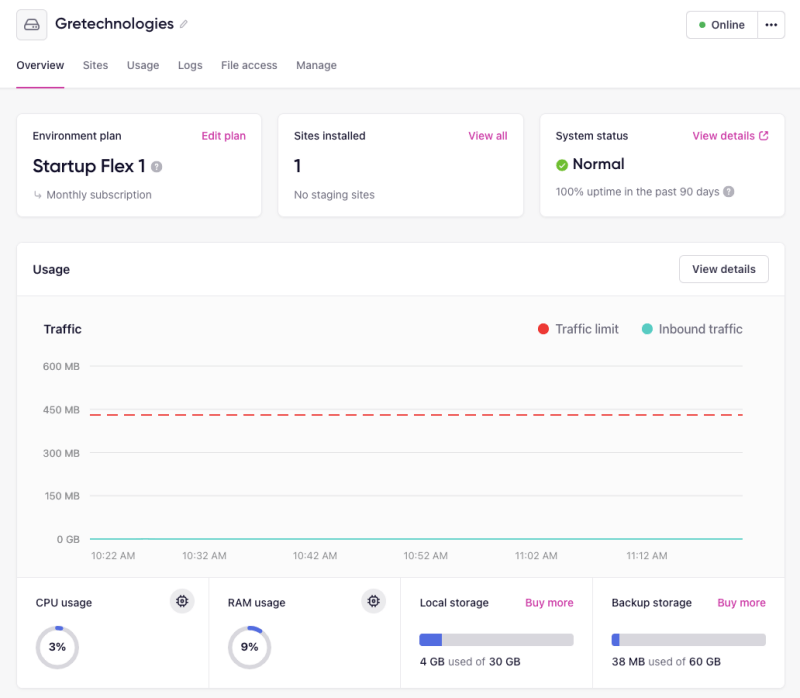
You will only pay for what you use. Auto-scaling ensures you aren’t overpaying during low-traffic periods while still being prepared for surges. In the dashboard, you can clearly see the storage usage. Check the reference image!
Benefits of Rapyd Cloud Auto-Scaling
- Keeps your website or app responsive and online even under sudden traffic spikes.
- Ensures a consistent user experience regardless of load.
- Automatically uses just the right amount of infrastructure. No more, or no less.
- Servicer adjustments and changes in traffic load should not be a concern for the developers, who do not have to adjust servers manually.
Auto scales resources both down and up according to current real-time traffic requirements. They are well suited to promote their products at promotions, during enrolment periods, or during flash sales.
2. Managed Databases with High IOPS
IOPS is a unit of comparing a database to read and write. The more the IOPS, the faster the performance of your database will be, particularly when there is heavy loading.
High IOPS is essential for:
- Fast-loading dynamic content
- Real-time transactions (e.g., checkout processes)
- Large-scale user queries
- High-concurrency applications
Key Features Of Rapyd Cloud High-IOPS Managed Databases
1. Ultra-Fast Storage
- Stores NVMe SSDs or storage that is of the high-end tier with optimizations to produce low-latency, high-throughput performance.
- Accommodates tens of thousands of IOPS of mission-critical workloads.
2. Redundancy and High Availability
- Data durability and fault tolerance by multi-zone replication.
- Automatic failover systems so as to maintain uptime when servers fail.
3. Backup and Recovery
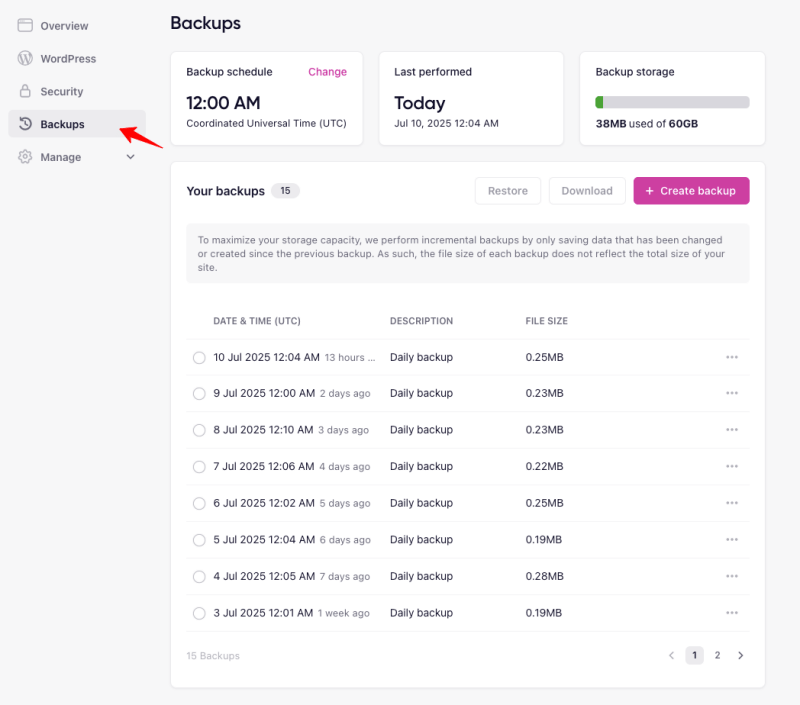
- Automatic daily backups and point-in-time recovery.
- Pre-release supply of on-demand snapshots.
4. Advanced Monitoring
- Query performance, storage utilization, CPU/ RAM load, and IOPs in real-time.
- Suggestions for performance tuning and alerting.
5. Security-First Design
- Encryption that covers data at rest and in transit.
- Access restrictions such as IP-whitelist, firewall rules.
- Adhering to such industry standards as GDPR, PCI-DSS, and HIPAA
Having a fast site has more to do with the speed of caching than with the speed of back-end databases supporting queries and transactions. With Rapyd Cloud, your app or site can perform seamlessly, even under pressure, thanks to the high IOPS of its managed databases.
3. Global CDN and Edge Caching
1. Global Edge Network
- Rapyd CDN uses a reverse proxy architecture with globally distributed Points of Presence (PoPs) to cache content closer to users to reduce latency and boost your site performance.
- Data is served from the nearest edge node, resulting in faster Time to First Byte (TTFB) and improved user experience worldwide.
2. Intelligent Caching (Static & Dynamic)
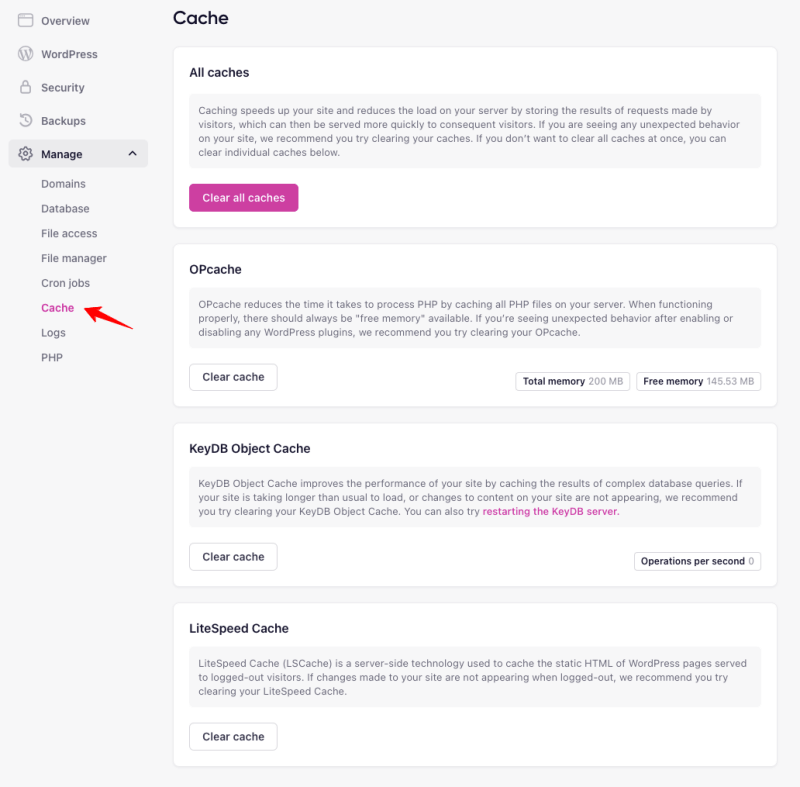
- Caches static assets (images, CSS, JS) and even dynamic pages, and hence it can cut down the server load at the origin.
- Supports advanced micro-caching strategies (full page and CDN-level) for frequently accessed dynamic/output-heavy content.
3. Automatic Image Optimization
- Rapyd Cloud has an in-built optimization engine that automatically compresses your images and converts them into modern formats like WebP so as to reduce your load times and bandwidth usage.
4. Enhanced Security at the Edge
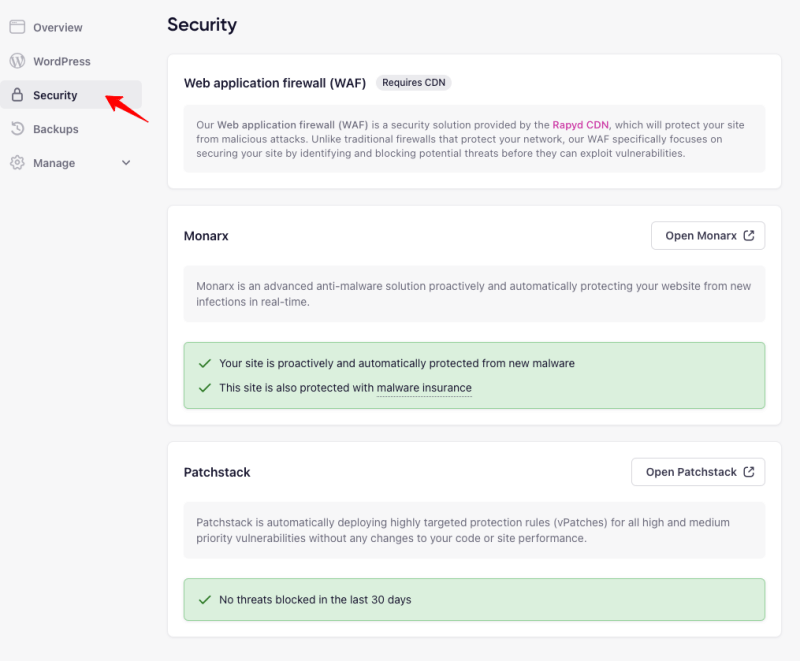
- This dynamic website hosting includes DDoS protection, SSL/TLS encryption, and an optional Web Application Firewall (WAF) that filters your malicious traffic right at the CDN layer.
- Besides, this improved security feature comes as the first line of defence before the traffic reaches your origin server.
5. Reduced Bandwidth & Scale Optimization
- Offloads static and some dynamic content to edge servers, substantially reducing bandwidth usage and server load on the origin
- Helps maintain performance under sudden traffic spikes, especially for resource-heavy sites like WooCommerce or LMS platforms.
6. Free & Unlimited Usage
- No extra charges. Every Rapyd Cloud plan includes unlimited use of the CDN
- Provides enterprise-grade benefits (caching, global delivery, security) without additional fees.
By combining a global CDN, smart caching, and edge security, Rapyd Cloud significantly improves your website’s speed and reliability.
If you run a high-traffic WordPress, WooCommerce, LMS, or membership site, this hosting will be a good companion to take it to the next level. This integrated, no-extra-cost solution makes high-performance infrastructure accessible to users of all levels.
My High-Traffic Site Test Results With Rapyd Cloud Hosting
I hosted my high-traffic eCommerce site with Rapyd Cloud and monitored the server performance. I got surprising results!
I run the speed test to find out the TTFB and Core Web Vitals scores. Check the impressive value below!

| Performance | Structure | FCP | LCP | CLS | TTFB | FLT | TBT |
| 100% | 98% | 558MS | 642MS | 0MS | 406MS | 789MS | OMS |
Now, let’s see the requirements of the high-traffic websites and how the Rapyd Cloud hosting can support them!
What Are The Difficulties In Managing The WooCommerce Websites?
Let me consolidate the challenges that the WooCommerce sites face!
Key Challenges:
- High traffic during sales and promotions
- Large product catalogs and media
- Real-time cart, checkout, and inventory operations
- PCI compliance and payment security
How Rapyd Cloud Supports eCommerce Sites?
From the following visual representation, recognize the role of Rapyd cloud hosting for Woocommerce sites!

| Feature | How Rapyd Cloud Helps for eCommerce |
| Auto-scaling Infrastructure | Handles traffic spikes during promotions without any site crashes. |
| NVMe SSD + Redis Caching | Speeds up product search, cart operations, and catalog browsing. |
| WooCommerce Optimization | Server stack is fine-tuned for PHP, MySQL, and common eCommerce plugins. |
| Global CDN | Ensures quick delivery of images and product pages worldwide. |
| PCI-DSS Compliant Security | Supports secure transactions and data encryption. |
| Daily Backups + Staging Sites | Ensures you can test changes and roll back quickly if required. |
| Payment Gateway Support | Easily integrates with Stripe, PayPal, and Rapyd Payments. |
Rapyd cloud hosting can support object caching and query optimization, which are essential to handle thousands of SKUs or logged-in shoppers.
What Challenges Do Large Membership Websites Encounter?
Here are the hurdles of membership sites!
- Lots of logged-in users at once
- Personalized content and restricted access
- Subscription payments and renewals
- Session management and performance under load
How Can Rapyd Cloud Be Used To Manage Membership Sites?
For easy understanding, I have written the responsibilities of Rapyd Cloud in a table.
| Feature | How Rapyd Cloud Helps Membership Sites |
| Session-aware Caching (Redis) | Maintains speed even with many logged-in users. |
| Database Optimization | Handles user profile queries and dynamic access rules. |
| Advanced Security & Firewalls | Protects user data, login forms, and payment systems. |
| Support for CRON & Queues | Ensures smooth execution of subscription renewals and email alerts. |
| Staging Environments | You can test the plugin updates safely and access rules. |
| Email Deliverability Tools | Ensures membership emails reach inbox of your subscribers. |
Rapyd Cloud handles rate limiting and bot protection, which are important for membership sites to prevent brute-force login attempts.
What Are The Pain Points Of Learning Management Systems?
Read the technical challenges of LMS websites!
- Streaming and downloading course videos and files
- High concurrent access during classes or exams
- Interactive elements like quizzes, timers, and certificates
- User progress tracking and performance analytics
What Features Of Rapyd Cloud Hosting Benefit LMS Platforms?
I have consolidated the amazing qualities of Rapyd Cloud hosting that supports the LMS websites, have a glance in the table below!
| Feature | How It Helps |
| Global CDN + Video Hosting Integrations | Ensures fast, buffer-free video delivery. |
| High RAM and CPU Resources | Supports concurrent quiz sessions and video streaming. |
| Database Query Optimization | Speeds up course loading and user progress tracking. |
| Backup & Restore Tools | Protects against data loss for course content and student records. |
| Staging + Versioning | Safely deploy new course materials and LMS plugins. |
| Integration with Zoom, WebRTC, and SCORM | Supports live classes, interactive content, and compliance standards. |
Rapyd Cloud offers LMS-specific tuning for platforms like Moodle, with support for large course catalogs, automated grading, and SCORM modules.
Comparing Rapyd Cloud with VPS & Cloud Hosting
Which hosting supports dynamic websites for outstanding results? I’m keenly interested in comparing the Rapyd Cloud hosting with traditional VPS hosting and Cloud hosting.
| Feature | Rapyd Cloud | Traditional VPS | AWS/Google Cloud |
| Auto-scaling | ✅ Native | ❌ Manual Scaling | ✅ Advanced |
| LMS Optimization | ✅ Built-in | ❌ Requires config | ❌ Generic |
| eCommerce Tools | ✅ Pre-optimized | ❌ Generic | ✅ Plugin-based |
| Ease of Use | ✅ Intuitive UI | ❌ Dev-heavy | ❌ Complex |
| Cost Predictability | ✅ Fixed plans | ❌ Variable | ❌ Usage-based |
Can Rapyd Cloud Hosting Handle The Demands Of High-Traffic Websites?
Here are my final words!
Undoubtedly, Dynamic Sites requires robust Hosting. They constantly generate real-time content such as user dashboards, shopping carts, and live forms.
This puts stress on:
- Database reads/writes
- PHP processes (workers)
- Caching layers
Without purpose-built infrastructure, performance tanks under load. Modern solutions like LiteSpeed Enterprise, database optimization, Redis, and auto-scaling are essential.
If you run a dynamic website that needs speed, scalability, and reliability, Rapyd Cloud can help you stay on peak. Rapyd Cloud can handle response delays from server lag, downtime during manual upgrades, security breaches, and improperly tuned caches.
Whether you’re managing thousands of students on an LMS, handling checkout flows on a busy eCommerce store, or serving a growing membership community, this cloud hosting for performance ensures you stay online, fast, and competitive.



This was really helpful—high-traffic websites definitely need more than just standard shared hosting. I appreciate the breakdown between VPS, dedicated, and cloud solutions. It’s easy to underestimate the impact hosting has on speed, uptime, and SEO. Definitely considering a scalable option now. Thanks for the clear advice!
This was such an inspiring read. I also run a blog about career and finance topics, and your story reminded me that consistency really is key.
Bookmarking this to revisit during low-motivation days. 🙌
I’ve recently been testing LiteSpeed servers, and I noticed significant performance improvements. Would love to see your take on how LiteSpeed compares to traditional NGINX-based setups for high traffic scenarios.
Rapyd Cloud’s auto-scaling and high IOPS database features are impressive—especially for platforms handling dynamic content and fluctuating traffic. This review highlights exactly what growing eCommerce and LMS platforms should prioritize. Thanks for the detailed breakdown!
This was a really helpful breakdown of what to look for in high-traffic hosting. Many people focus only on price, but performance, uptime, and scalability matter so much more when your website starts growing. I especially liked the point about choosing a host that can handle sudden traffic spikes something most businesses don’t think about until it’s too late. Thanks for sharing these insights!