

Glad to present this comprehensive WP Rocket Review for you. In this article, you will learn about this performance cum cache plugin and understand how it can improve your site’s ranking.
I’m sure that my settings & features explanation and test results will help you decide whether to buy this WordPress speed plugin.
The WP Rocket plugin offers impressive features, such as JavaScript minification and reduced server requests to improve core web vitals. Now let’s dive into the topic.
Disclosure: We get a commission when you buy a product via our affiliate link at no additional cost.
Table Of Contents
WP Rocket plugin – A Quick Intro

I’ve learned in over a decade of blogging that the site speed is everything. A slow website quietly kills your traffic, conversions, and search rankings. That’s exactly why I started using WP Rocket.
WP Rocket is one of those rare plugins that just works right out of the box. You don’t need to be a developer or spend hours tweaking settings to see real improvements.
From page caching to file optimization and lazy loading, it handles the heavy lifting so your site loads faster and your readers stick around longer.
I’ve personally tested many performance plugins over the years, and what sets WP Rocket apart is its balance of power and simplicity.
Whether you’re running a blog, business site, or WooCommerce store, it’s designed to give you measurable speed gains without the usual technical headaches.
Jonathan Buckley, the owner of a WordPress management agency, says this about WP Rocket: “I have installed and configured WP Rocket on more than 30 websites and found it the most effective solution.“
In this guide, I’ll walk you through what WP Rocket does, why it’s worth considering, and how you can use it to speed up your own website.
Essential Features of WP Rocket
WP Rocket offers many features, and in this article, let’s explore some of the ways it can enhance your website’s performance.
Easy-to-Use Interface
WP Rocket’s interface is incredibly user-friendly. After activating the plugin, you will find the WP Rocket tab on the left side of your WordPress dashboard.
Here, you can access a comprehensive list of features, including the cache tab, optimization tab, and CDN tab. Click the section you want to explore, and you’ll see all the options on the screen.
File Optimization
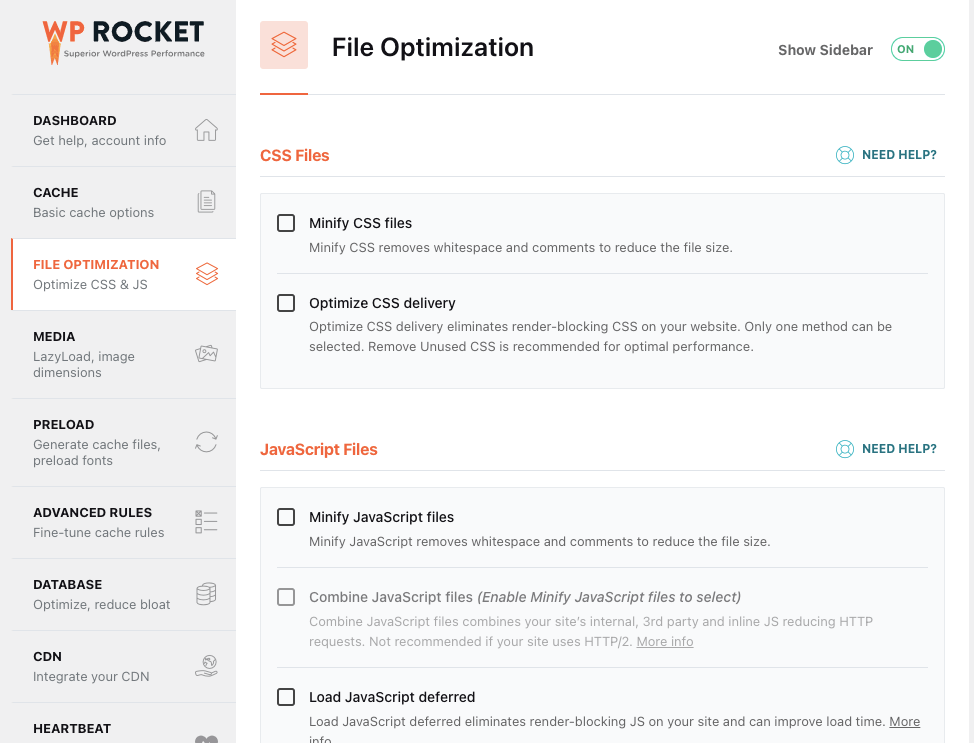
First, input delay can occur due to JavaScript files and CSS files. The good news is that WP Rocket provides solutions in the file optimization tab, addressing this issue in three ways:
Minify JS and CSS Files: WP Rocket minifies both files by removing white spaces and comments. After minification, these files may be unreadable to humans but are optimized for computers.
Combine Files: This option merges all CSS and JavaScript files, reducing the number of HTTP requests and significantly speeding up your server’s response time.
Load JS and CSS Deferred: The first input delay happens due to delayed loading. WP Rocket defers file loading until all the content elements are not loaded.
Media Optimization
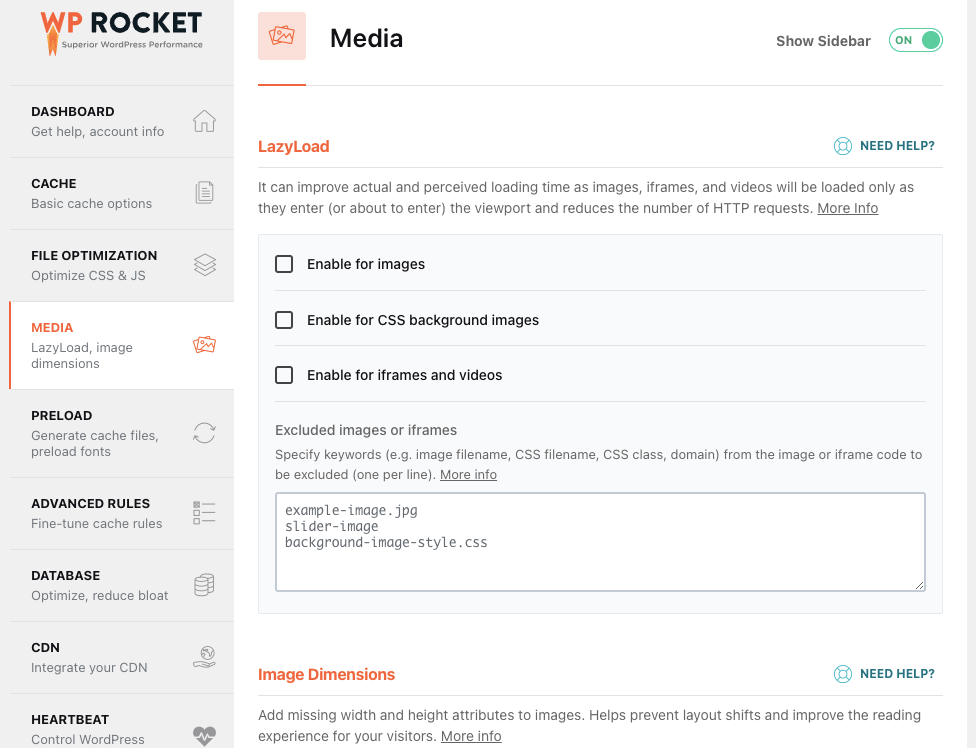
Images and videos significantly impact web performance. WP Rocket’s media optimization features are helpful for that.
Lazyload: This feature allows images to load when users scroll to them rather than all at once when the page loads. This improves page loading speed.
Image Dimensions: WP Rocket eliminates layout shifts by specifying image dimensions, as discussed in the Cumulative Layout Shift section.
Imagify: This tool compresses and resizes images without compromising quality, reducing page size and improving load times.
Database tab
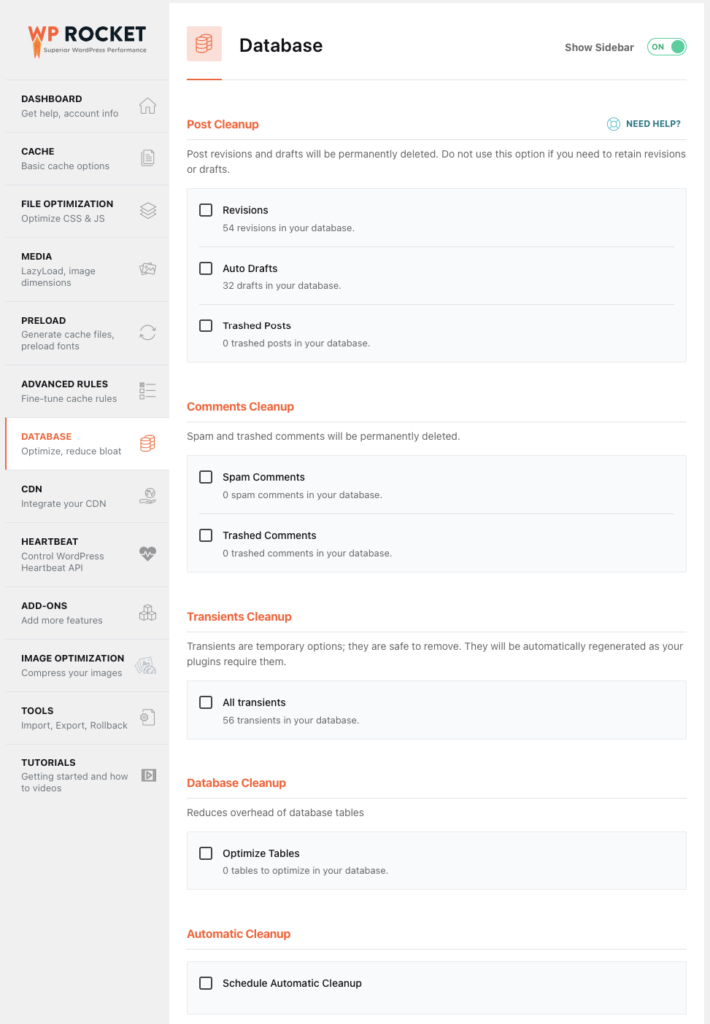
Your site accumulates unnecessary data as it grows, such as old drafts, revisions, spam comments, and trashed posts. This data can slow down your site and increase loading times.
WP Rocket’s database cleanup add-on lets you remove this redundant data. You can also set it to automatically clean up your database at specified intervals (daily, monthly, or yearly).
Cache Optimization
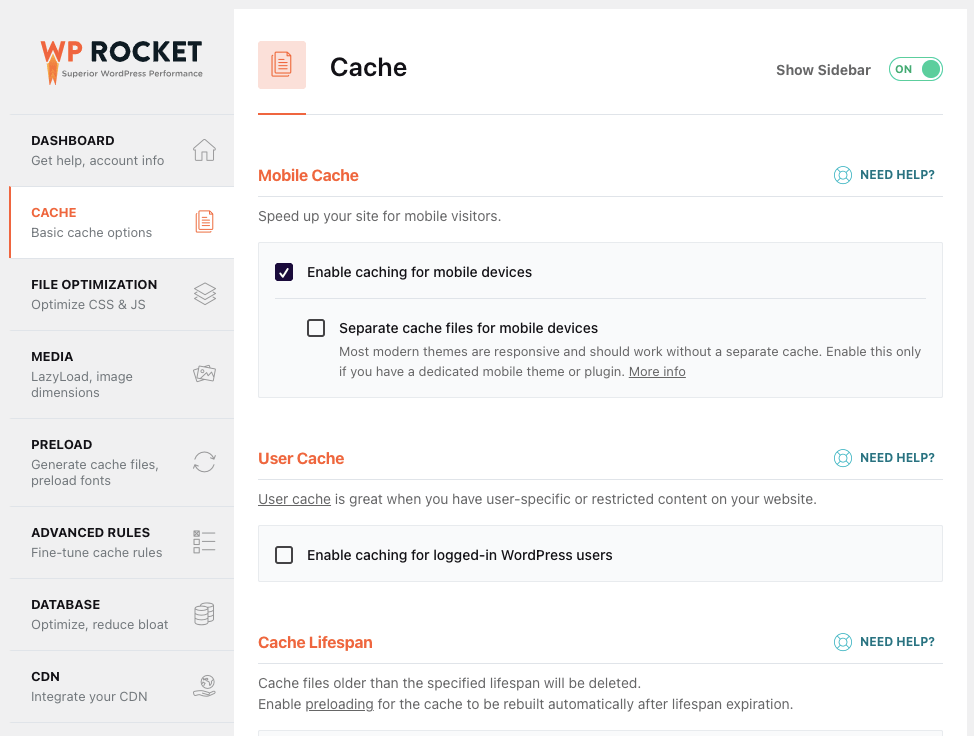
WP Rocket optimizes various types of caches:
Browser Cache: WP Rocket creates a static cache version in users’ browsers, allowing for faster loading when they revisit your site.
Preload Cache: This feature generates a cache for your website based on its sitemap. When users visit your site for the first time, it’s already preloaded.
Preload Fonts: this add-on caches fonts and avoids layout shifts that occur due to different sizes of fonts.
Mobile Cache Optimization: With most users browsing on mobile devices, WP Rocket creates a mobile-optimized cache version of your site for improved mobile performance.
Support
WP Rocket only has a premium plan, allowing them to focus on support. However, they can’t provide live support. Instead, you can send a message from the WordPress dashboard by opening its help desk menu.
Furthermore, WP Rocket guides have most of their documentation embedded in the tabs. Just click on ‘need help,’ and you will get a guide on how to use that specific feature.
How have I tested the WP Rocket Plugin?
Without presenting the testing results, the WP Rocket Review is incomplete. It’s time to test the website and provide real-life examples.
GTmetrix Test:
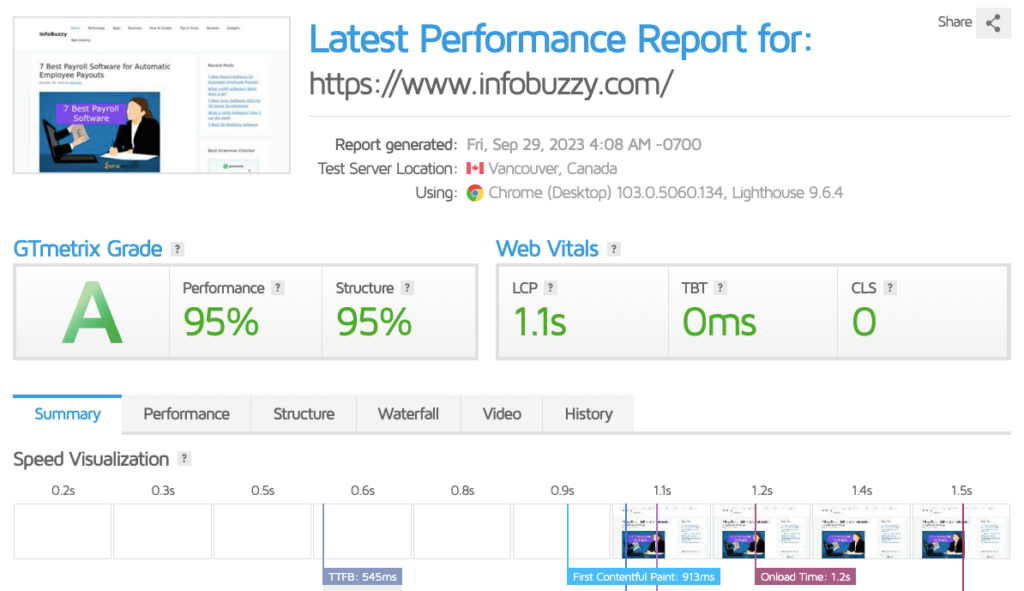
Here, I have tested my site without the WP Rocket plugin, and here are the results:
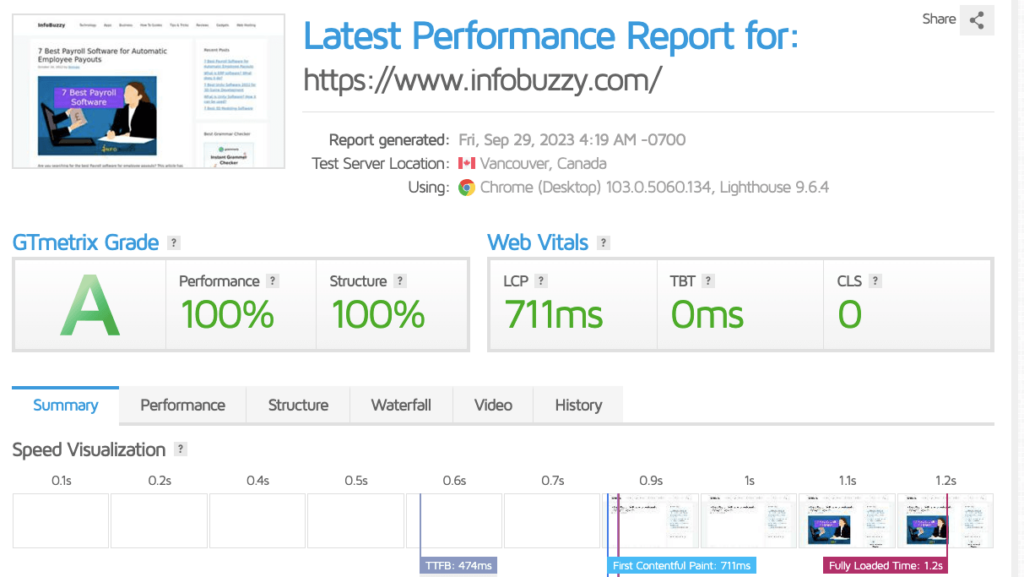
Here is the result with WP Rocket’s default settings. You can see the significant performance improvements in LCP and TTFB.
WP Rocket Speed Test Results
| Metrics | Before | After |
| GTmetrix score | 95% | 100% |
| Performance | 95% | 100% |
| LCP | 1.1s | 711ms |
| TTFB | 545ms | 474ms |
| CLS | 0 | 0 |
Plans and Pricing
This section is crucial for deciding whether the plugin is worth purchasing and selecting a plan that suits your website’s needs. Let’s focus on a brief overview of the plans and pricing.
WP Rocket offers three plans based on how many websites you want to use the plugin for. Here is the list:
- For one website: $59/year
- For three websites: $119/year
- For unlimited websites: $299/year
All the plans are almost the same, differing only in the number of sites you can use. The features are the same for all paid plans.
One offer that WP Rocket provides is a money-back guarantee. You can try this cache plugin for 14 days, and if you’re not satisfied, you will get a refund.
Another aspect of these plans and pricing is that you can’t upgrade the support level of the team. You will receive the same level of support at every stage.
WP Rocket offers CDN and image compression features, but they cost extra.
1. CDN: A Content Delivery Network with multiple locations worldwide stores data from the hosting server. When a user visits a site, the browser receives data from a CDN location rather than the hosting server location. This reduces the time it takes to retrieve data from the hosting server to the user’s location.
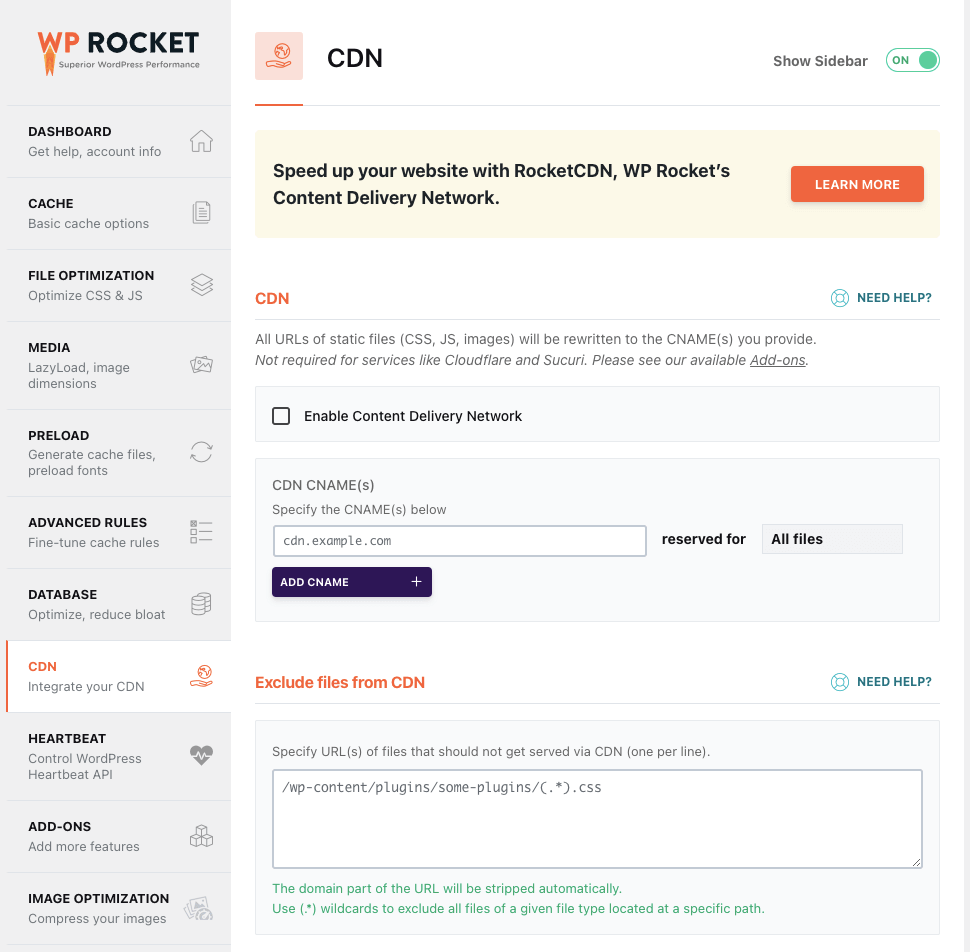
WP Rocket includes CDN features, but you will pay $7.99 per month per site, regardless of your chosen plan.
2. Image Compression: Imagify is an add-on that optimizes images. It compresses and resizes images, helping to reduce the size of web content (pages or posts) and load them faster. Significantly, it compresses files without compromising image quality.
This add-on costs $4.99/month. Like CDN, you will pay $4.99 for every site, regardless of your purchased plan.
If you opt for a yearly plan, the cost will be reduced compared to the monthly plan. Here’s a breakdown of plans that include both features:
WP Rocket Cache + Rocket CDN + WP Rocket Imagify = Full WP Rocket for a year
$59.00 + $79 + $60 ≈ $198/Year for a single site with CDN and Imagify.
Pros and Cons of WP Rocket
Here’s a breakdown of the advantages and disadvantages of WP Rocket:
Pros:
- Easy to set up, configure, and use.
- Essential settings are already configured by default.
- 14-day money-back guarantee if you’re unsatisfied.
- Excellent support and extensive documentation.
- User-friendly interface, and you don’t need any skills to use it.
- Lazy loading, which avoids the need for additional plugins.
Cons:
- There is no free trial; you must pay to try the plugin.
- Live support such as chat or phone, are not available.
- Additional costs for CDN and Imagify may add up.
- Does not offer a free version.
WP ROCKET Vs W3TC Vs NITROPACK
In the review of WP Rocket, here is a comparison analysis between the three cache plugins!
| Feature | WP ROCKET | W3TC | NITROPACK |
| Cache | Yes | Yes | Yes |
| Page Caching | Yes | Yes | Yes |
| Browser Caching | Yes | No | Yes |
| Database Optimization | Yes | No | Yes |
| Cache Preloading | Yes | Yes | Yes |
| Minification | Yes | Yes | Yes |
| Mobile Detection | Yes | Yes | Yes |
| Free Version | No | Yes | Yes |
| Pricing | $59 | $99 | $210 |
I also compared it with its direct competitor, FlyingPress. Check out this honest comparison, FlyingPress vs WP Rocket, where I share my real experience and test results to help you pick the right one. You must also read Nitropack alternatives to understand about other WordPress plugins for speed.
Frequently Asked Questions
Is WP Rocket worth it in 2026?
Yes! Especially if you value ease of use and immediate performance gains. Unlike many caching plugins, WP Rocket works almost instantly after activation, without requiring complex setup. From my experience, it is a fastest way to improve Core Web Vitals without hiring a developer.
Which is better, W3TC or WP Rocket?
WP Rocket’s premium plan is better than W3TC. If you have the budget, WP Rocket is the better choice. However, for beginners, W3TC is a suitable alternative
Is Rocket CDN good?
Rocket CDN is a leading content delivery network and works seamlessly with the Rocket Cache plugin to improve web performance.
Is WP Rocket better than Other caching plugins?
Free plugins like W3 Total Cache or LiteSpeed Cache can be powerful, but they require technical configuration. WP Rocket stands out for its simplicity and reliable results, making it ideal for bloggers and non-developers. However, when compared to FlyingPress, I feel that it should improve its features in some cases.
Wrapping Up
After using WP Rocket across multiple sites over the past several years, I would say it’s one of the few WordPress plugins that consistently delivers on its promise.
What makes it stand out isn’t just performance! I admire it’s reliability and simplicity. You don’t need to spend hours tweaking settings or worrying about breaking your site. It just works.
And in a world where site speed directly affects rankings, user experience, and revenue, that peace of mind is incredibly valuable. This is what I want to conclude in my unbiased WP Rocket review 2026.
- Is it the cheapest option? No.
- Is it the most beginner-friendly and time-saving? In my experience—yes.
If you’re serious about growing your blog or online business and want a fast, hassle-free way to improve your website speed, WP Rocket is absolutely worth considering.
My recommendation: Start with WP Rocket and expand to CDN or image optimization later as your site grows.




Hello Sakthi,
Really WP-Rocket is my favorite. Using it for the last 2 years. Amazing boost on site speed with minimal settings and configuration. Looking forward to extending the license for more sites, and waiting for this Black Friday deal.
Definitely, purchasing WP-Rocket would not be a dead deal.
Thanks for sharing the in-depth review