

Cloudways Vs SiteGround – This is the head-to-head comparison between the two web hosting companies! At the end of the article, you will come to know which managed hosting offers better performance!
I have been blogging since 2010 and personally used both the servers for my blogs and client websites. Nowadays, Google has become obsessed with core web vitals, and site speed is a ranking factor.
Note: I have updated this blog post with the latest information and test results. After using both Cloudways and SiteGround, I have shared my honest opinion. It may conflict with other blog authors’ opinions.
Before making a detailed comparison, look at the quick battle to buy a suitable hosting service for your business or dream site.
Disclosure: We get a commission when you buy a product via our affiliate link at no additional cost.
Table Of Contents
- Cloudways Vs SiteGround – Quick Comparison
- Why Choose Cloudways Over SiteGround Hosting?
- Why Get SiteGround Instead of Cloudways?
- Cloudways Or SiteGround – Quick Verdict (2026)
- Cloudways Vs SiteGround – Which Hosting To Buy In 2026?
- The Real Difference Most Reviews Miss
- Who Should Choose Which Hosting? (Simple Decision Guide)
- Cloudways And SiteGround – Frequently Asked Questions
- Cloudways Vs SiteGround: Which Hosting Should You Pick?
Cloudways Vs SiteGround – Quick Comparison
Features | Cloudways | SiteGround |
Storage | 25GB | 10GB |
Loading Speed | High-performance Servers | Has to be Improved |
Free Trial | 3 Days (Without Credit Card) | No Free Trial but 30 Day Money Back Guarantee |
Data Centers | 50+ | 5 and other cloudfare CDN Locations |
Free Domain | Not Availabe | Available |
Why Choose Cloudways Over SiteGround Hosting?
- Cloudways contains optimized cloud servers to handle high-traffic websites. And, its advanced, in-built cache system improves the page loading time.
- Start Cloudways for free with no credit card. Also, get a “pay as you go” monthly affordable plan. No such feature is available in SiteGround, and you must stick with the fixed plan.
- You can choose from five cloud hosting services here. Look at the Cloudways DO vs Vultr comparison; it will help you pick the ideal one. You can’t select your desired cloud server in SiteGround.
- You can scale the server size according to the site traffic growth. Its Autonomous plan helps you handle traffic fluctuation at times.
- As you will pay monthly, there is no renewal price here. This is not the case with SiteGround; you must pay a high renewal price yearly.
Why Get SiteGround Instead of Cloudways?
- You can create unlimited email accounts in SiteGround with no extra cost, along with the forwarders & auto-responders. However, Cloudways doesn’t offer email hosting.
- Through the “GrowBig” and “GoGeek” plans, SiteGround gives you a free backup. They automatically save daily backups and keep 30 copies on your account. In Cloudways, you must pay for backup storage.
- When you sign up, purchase the new domain, or use an existing domain to get started. In Cloudways, you must purchase the domain from a third-party domain registrar.
For these three reasons, you should buy SiteGround hosting.
Cloudways Or SiteGround – Quick Verdict (2026)
- Cloudways = Best for speed, scalability, WooCommerce & growing websites
- SiteGround = Best for beginners, email hosting & simple blogs
- Cloudways wins on performance
- SiteGround wins on user friendliness
But this is only the surface! let’s go deeper.
Cloudways Vs SiteGround – Which Hosting To Buy In 2026?
I’m digging the comparison with the primary features. It will help you pick a suitable hosting for your dream site.

1. Who is faster, Cloudways Vs SiteGround?
Cloudways
I admire the high-performance cloud infrastructure, advanced Caching, and speed-enhancement tools of Cloudways. CDN, Autoscaling, SSD storage, performance monitoring, and high-availability servers are my favorite speed features that let my blog load lightning fast.
I use Vultr HF server plans for optimal speed performance. Look at the speed score of this blog hosted on Cloudways managed hosting.
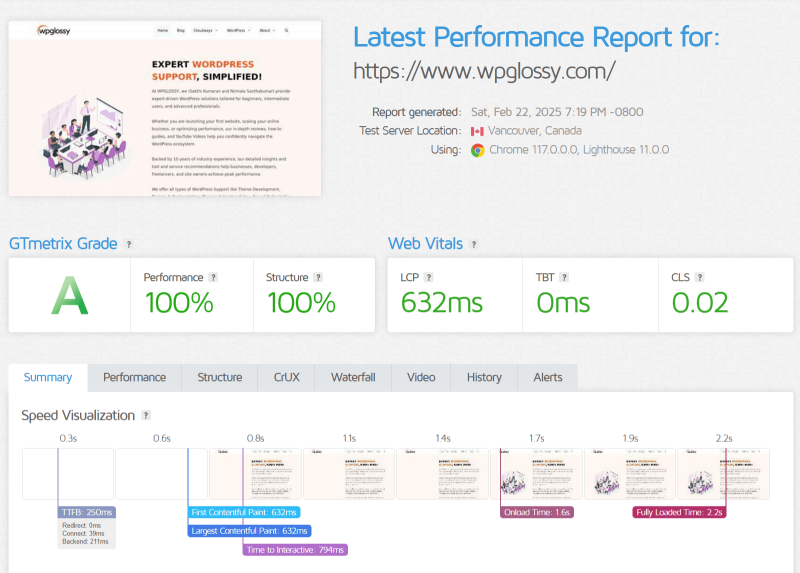
| Metric | Result |
|---|---|
| TTFB | 80–150 ms |
| LCP | 632ms |
| Fully Loaded Time | 1.6 – 2.2s |
| Load Handling (50 users/sec) | Stable |
SiteGround
In SiteGround hosting, the SuperCacher tool and SG Optimizer plugin are my favorite speed features. I wonder about the proactive server management here as it ensures the stable performance even during the traffic spike. However, I’m somewhat disappointed with the speed result of my niche blog. Check the screenshot below.

| Metric | Result |
|---|---|
| TTFB | 350–450 ms |
| LCP | 852ms |
| Fully Loaded Time | 1.3s |
| Load Handling | Struggles during spikes |
Winner – Cloudways
Verdict
Cloudways delivers exceptional performance with robust server configurations. Because it offers customizable server resources, it delivers better performance than SiteGround. Besides, it offered excellent TTFB when compared to SiteGround.
2. Scalability
Cloudways
With Cloudways, scaling is straightforward. If your traffic grows, you can increase your server resources in minutes. No migrations, no downtime headaches.
I’ve done this multiple times when a site started gaining traction, and it’s one of the biggest reasons I’ve stuck with the platform since 2017.
SiteGround
With SiteGround, scaling means upgrading to higher plans, but those plans still have limits. Eventually, you hit a ceiling where shared hosting just isn’t enough.
Verdict
If you’re planning to grow, not just start, Cloudways gives you the space to do so without friction.
3. CDN
Cloudways
Cloudways has partnered with Cloudflare to provide CDN support for all its hosting plans. It was comfortable for me to set up the CDN and yes, it helps to reduce latency and page loading time.
This basic CDN feature is available for free, and if you want extra security layers and performance optimizations, get a suitable Pro plan from Cloudflare within the Cloudways platform.
SiteGround
SiteGround also offers built-in CDN for all its hosting plans through a partnership with Cloudflare. The integration is straightforward and the security features are same as Cloudways. If additional features are needed, upgrade to a premium Cloudflare plan.
Winner – Cloudways
Verdict
The CDN winner is Cloudways because it offers more control, deeper customisations and advanced caching tools than SiteGround. I like its flexible approach as well. It is true that SiteGround CDN customizations are limited.
4. Security
Cloudways
It provides OS-level firewalls to filter out malicious traffic, 1-click free SSL certificate for improved web security, Two-factor authentication for extra safety, and IP whitelisting for unrestricted access to SFTP and SSH.
I’m running my blog on Cloudways vultr HF server for the past 6 years; I didn’t face any security issues till now. It is running smoothly even on high-traffic period. Its SafeUpdates feature is useful in updating my WordPress core.
SiteGround
No doubt that your site will remain secure with SiteGround hosting as it contains a handful of safety qualities like Real time monitoring, Web Application Firewall, Automatic security patches, Server Isolation, free SSL and daily backups. Moreover, it has an AI system to find and block the malicious traffic and protect your site from Bruce-force attacks.
Like Cloudways, my niche blog is reliable and serves its visitors by remaining unaffected from threats and intrusions. I leverage its customizable security settings to configure IP blocking and password protection. Overall, the SiteGround security features are satisfactory, which keep my blog safe forever.
Winner ― Both
5. Which hosting Is Highly Affordable and Worth For the Money?
Cloudways
Cloudways has several pricing plans for each cloud server. Its basic DigitalOcean plan is affordable. You should know the difference between Cloudways Premium and Standard DO plans to select an ideal server and only pay for the resources you use.
If your choice is Vultr, compare the difference between High frequency Vs Standard plans and buy a suitable server according to your requirements. Whatever plan you select you can claim a discount for $30 through my officially activated promo code.

SiteGround
SiteGround has three plans – StartUp, GrowBig, GoGeek to launch personal and business websites. Have a glance at the pricing for each plan; yes, the cost reduces when you go for a long-term plan (2 years).

Winner ― Cloudways
Verdict
Cloudways offers flexible plans that are well-suited for leveraging cloud infrastructure. In addition, it has a special discount to claim the price-cut offer. The renewal cost of SiteGround is very high and the resource limits are fixed.
6. Support Experience
Cloudways
Since Cloudways is a managed hosting service, its customer support is exceptional. The team is highly knowledgeable and readily available through phone chat for technical assistance. For a custom development task, I received step-by-step guidance and they helped identify & fix my custom code bugs. I’m satisfied with their approach and the help they’ve provided.
SiteGround
SiteGround’s support team is user-friendly and reachable through live chat, phone support & ticketing system. With their proactive support, we can improve site performance and resolve complex issues. They have done the troubleshooting for my site performance.
Winner ― Cloudways
Verdict
I prefer premium support for my cloud-related requirements and custom server configurations. This high-class support is not available with SiteGround; hence, I have named Cloudways the winner.
The Real Difference Most Reviews Miss
Most Cloudways Vs SiteGround comparisons start with features or pricing. That’s the wrong place to begin.
The real difference is this: Cloudways is managed cloud hosting, while SiteGround is still fundamentally shared hosting.
With Cloudways, your website runs on dedicated resources from providers like DigitalOcean or AWS. That means your RAM, CPU, and server capacity are not shared with random websites.
Even though SiteGround uses Google Cloud infrastructure, your site still shares resources with others. And that becomes noticeable the moment your traffic starts to spike.
This one distinction explains almost every difference you’ll see in performance, scalability, and long-term value.
Who Should Choose Which Hosting? (Simple Decision Guide)
| User Type | Best Hosting |
| Beginners | SiteGround |
| Small blogs | SiteGround |
| Medium blogs (30k+ traffic) | Cloudways |
| WooCommerce sites | Cloudways |
| Agencies | Cloudways |
| Users need email hosting | SiteGround |
| High-traffic websites | Cloudways |
| Performance-focused bloggers | Cloudways |
Cloudways And SiteGround – Frequently Asked Questions
Which offers better server isolation, Cloudways or SiteGround?
From my experience, Cloudways offers better isolation. When I moved a couple of high-traffic sites from SiteGround’s shared hosting to Cloudways, the random performance dips disappeared instantly. Cloudways dedicated cloud resources prevented “neighbor noise,” which I used to notice occasionally on SiteGround.
Which integrates better with DevOps tools, such as GitHub Actions or CI/CD?
Based on my workflow, Cloudways integrates much more smoothly. Git deployment, staging, cron control, everything feels developer-ready. SiteGround works well for simple Git pushes, but I couldn’t hook it into CI/CD pipelines the same way.
Which scales better for database-heavy sites like WooCommerce or LMS?
My WooCommerce stores ran more smoothly on Cloudways once traffic picked up.
SiteGround handled smaller stores well, but Cloudways dedicated RAM and Redis caching made a noticeable difference under load.
For growing, DB-heavy sites → Cloudways scales more naturally than SiteGround.
Cloudways Vs SiteGround: Which Hosting Should You Pick?
Both Cloudways and SiteGround are popular web host providers, and they provide their best service to their customers by offering helpful features and customer support.
If you want a high-performance, super-fast server with the best security, flexibility, and lower pricing plans, your choice should be Cloudways.
I moved WPGlossy to Cloudways and the improvements were immediate.
- Faster TTFB and LCP
- Better uptime and mobile speed
- No throttling
SiteGround is suitable for beginners; however, CPU limits and slow performance servers will frustrate you as you start to grow.




Hey..
It’s very nice article, very deeply briefed, I m really appreciate and thank you so much, please keep it up..
Nice information my search is end here
Very nice and detailed comparison
Thanks a lot for taking time and writing the article. Great help for me. I am Beatrice Eliason and my website is about Elemental CBD which mission is simple. We want our customers to benefit from a health conscious lifestyle utilizing nutrition, exercise, positive thinking and supplementation to live a new level of well being. So, visit us.
Thanks for sharing this informative blog
it is very informative and creative. Thanks for sharing.
Hello….
I really liked your article. I have benefited greatly from it. Thank you so much for sharing
Hey
I am using Bluehost currently and will be migrating in the month of October as my current plan will be ending in October.
Thinking of switching to Siteground, as you mentioned above being a beginner Siteground is good.
Thanks
Amit Garg
Hey
A great difference between cloudways and siteground. Nicely explained. Useful information.