

If your WordPress site is slow, the issue is rarely just your hosting! It is usually because caching isn’t implemented properly, or the wrong plugin is being used.
Over the last 15+ years of blogging and managing WordPress sites, I’ve tested many caching plugins across different hosting environments and on high-traffic sites.
One consistent pattern I’ve observed is that the right caching setup can reduce load times by more than 70% without changing your hosting plan.

In this guide, I’m not just listing plugins. I’m breaking down:
- Which cache plugin works best in real-world scenarios
- How different caching layers affect performance
- What actually improves Core Web Vitals (based on testing)
If you are looking for the best cache plugins for WordPress, read on to find the best one. I’m sure you will pick an ideal plugin from my experience and guidance.
Disclosure: We get a commission when you buy a product via our affiliate link at no additional cost.
Table Of Contents
- Quick Comparison: Best WordPress Cache Plugins
- Best Cache Plugins for WordPress (Detailed Review)
- 1. WP Rocket – Best Overall Cache Plugin
- 2. FlyingPress – Best Lightweight Performance Plugin
- 3. LiteSpeed Cache – Best Free Plugin (When Used Correctly)
- 4. W3 Total Cache – Best for Advanced Users
- 5. W3 Super Cache – Best For Beginners
- 6. NitroPack – Best All-in-One Optimization Tool
Quick Comparison: Best WordPress Cache Plugins
Before diving deep, here’s a practical comparison based on real usage!
| Plugin | Best For | Free Version | Starting Price |
| WP Rocket | All-around performance | ❌ | $59/year |
| LiteSpeed Cache | LiteSpeed hosting | ✅ | Free |
| W3 Total Cache | Advanced users | ✅ | Free |
| WP Super Cache | Beginners | ✅ | Free |
| FlyingPress | Performance-focused bloggers | ❌ | $59/year |
| NitroPack | Automation lovers | ❌ | Subscription |
If you struggle to choose between control, simplicity and raw performance, this table will help you get a clear idea.
Best Cache Plugins for WordPress (Detailed Review)
Let’s take a look at the 6 Best WordPress Cache plugins that can make your site load faster!
1. WP Rocket – Best Overall Cache Plugin

WP Rocket is the plugin I recommend as it delivers results without requiring technical expertise. In client sites I’ve worked on, simply activating this plugin with minimal tweaks has reduced load times from around 2.8 seconds to under 1 second.
What makes it stand out is how aggressively it optimizes performance while still maintaining stability. It includes built-in optimizations and directly affects metrics such as Largest Contentful Paint (LCP) and Time to First Byte (TTFB), which are crucial for SEO.
Since it’s a premium plugin, it may not be ideal for beginners on a tight budget. But if your goal is to improve speed without spending hours configuring settings, WP Rocket is the most reliable option available and it is the easiest way to improve Core Web Vitals without touching technical settings.
Best for: Bloggers, businesses, and anyone who wants fast results without complexity.
Key Features:
- Page caching + browser caching
- Lazy loading images
- Database optimization
- CDN integration
Pros:
✔ Beginner-friendly
✔ Excellent performance out of the box
Cons:
✖ No free version
Verdict: If you want the fastest WordPress cache plugin with minimal effort, this is it.
2. FlyingPress – Best Lightweight Performance Plugin

FlyingPress is a new plugin that has quickly gained traction among performance-focused users. I started testing this performance plugin on a few niche sites, and what stood out immediately was how lightweight and efficient it is.
FlyingPress is gaining popularity for its clean code and real-world performance gains. In real-world testing, it consistently improved Core Web Vitals, especially LCP and CLS. It also avoids many of the compatibility issues that heavier optimization plugins do.
It is a strong alternative to WP Rocket, especially for users who want high performance without unnecessary features. Even though it is a premium WordPress cache plugin, I would say that it is worth the money.
Best for: Speed-focused bloggers
Key Features:
- Page caching
- CSS/JS optimization
- Lazy loading
Pros:
✔ Lightweight
✔ Excellent Core Web Vitals improvement
Cons:
✖ Paid only
Verdict: One of the fastest-growing alternatives to WP Rocket.
3. LiteSpeed Cache – Best Free Plugin (When Used Correctly)

LiteSpeed Cache is the most powerful free caching plugin, but only when used in the right environment. What many users don’t realize is that it is more than just a caching plugin. I’ve tested this plugin on both LiteSpeed and non-LiteSpeed servers, and the difference is dramatic.
On LiteSpeed hosting, it uses server-level caching, which is significantly faster than traditional PHP-based caching. In one case, a site’s TTFB dropped from ~600ms to under 200ms after switching.
However, it does come with a learning curve. Its settings panel is extensive, and incorrect configuration can actually hurt performance. This is why I usually recommend it for users who are either willing to learn or already familiar with performance optimization.
Best for: Sites hosted on LiteSpeed servers
Key Features:
- Object cache (Redis support)
- QUIC.cloud CDN
- Image optimization
Pros:
✔ Completely free
✔ Extremely powerful
✔ Advanced optimization features
Cons:
✖ Best performance only on LiteSpeed hosting
Verdict: The best free cache plugin for WordPress if your host supports it.
4. W3 Total Cache – Best for Advanced Users
W3 Total Cache has been around for years, and I’ve used it extensively in the early days of WordPress optimization. It remains one of the most flexible caching plugins available, but that flexibility comes at a cost.
What makes W3 Total Cache unique is its ability to control every layer of caching. For developers or advanced users running complex WordPress setups, I feel this level of control is invaluable.
However, I’ve also seen many cases where misconfiguration led to slower performance or even broken layouts. Unlike modern plugins that prioritize simplicity, W3 Total Cache assumes you understand caching concepts deeply.
Best for: Developers and technical users
Key Features:
- Page cache, object cache, database cache
- CDN integration
- Minification controls
Pros:
✔ Highly customizable
✔ Free version available
Cons:
✖ Complex setup
✖ Easy to misconfigure
Verdict: Great power! However, you should know what you’re doing.
5. W3 Super Cache – Best For Beginners

WP Super Cache is one of the most stable and beginner-friendly caching plugins. In my early blogging years, this was one of the first plugins I used, and it still holds up for simple use cases.
It generates static HTML files of your pages, significantly reducing server processing time. The biggest advantage is its simplicity. You can enable caching with just a few clicks, and it works well with minimal configuration.
However, as websites grow and performance demands increase, WP Super Cache starts to show its limitations. For beginners and business startups, it’s a safe and effective starting point. But for competitive niches, you’ll need something more powerful.
Best for: Simple blogs and small sites
Key Features:
- Static HTML caching
- Easy setup
- CDN support
Pros:
✔ Beginner-friendly
✔ Completely free
Cons:
✖ Limited advanced features
Verdict: Good starting point, but limited for serious performance optimization.
6. NitroPack – Best All-in-One Optimization Tool
NitroPack takes a different approach compared to traditional caching plugins. Instead of giving you control over individual settings, it automates everything from caching to CDN delivery to code optimization.
I’ve tested NitroPack on a few projects where speed improvements were needed quickly, and the results were impressive. In some cases, PageSpeed scores jumped from the 60s to the 90s within minutes.
However, this convenience comes with trade-offs. Since NitroPack operates as a cloud-based solution, you have less control over how optimizations are applied. Nitropack is more expensive than traditional plugins.
Best for: Users who want everything automated
Key Features:
- Built-in CDN
- Automatic optimization
- Cache + image optimization
Pros:
✔ Fully automated
✔ Great for non-technical users
Cons:
✖ Can be expensive
✖ Less control
Verdict: Great if you want hands-off optimization.
Best Cache Plugin by Use Case
Choosing a caching plugin becomes easier when you focus on your specific usage rather than features.
For example, if you’re running a blog or business website and want consistent performance improvements without technical complexity, WP Rocket is the best choice based on my experience.
If you’re on LiteSpeed hosting, it doesn’t make sense to use anything other plugin than LiteSpeed Cache, since it leverages server-level caching that other plugins simply cannot match.
If you are a developer or advanced user who manages custom setups, W3 Total Cache still provides unmatched flexibility. For beginners or small site owners, WP Super Cache is more than sufficient.
How to Choose the Right Cache Plugin?
From working with different types of WordPress sites over the years, I’ve found that three factors matter most when choosing a caching plugin.
First is your hosting environment. A plugin that performs exceptionally well on LiteSpeed servers may not deliver the same results on Apache or Nginx.
Second is your technical comfort level. Some plugins offer deep customization but require careful configuration, while others prioritize ease of use.
Third is your website type. For example, WooCommerce sites require special handling because certain pages (like cart and checkout) should never be cached.
Understanding these factors will help you avoid one of the most common mistakes: choosing a plugin based on popularity rather than compatibility.
How Caching Improves SEO?
Search engines like Google use performance metrics such as Core Web Vitals to evaluate user experience. When your site loads faster, users stay longer, bounce rates decrease, and engagement improves. All of these contribute to better rankings.
From a technical perspective, caching reduces server response time (TTFB), which is a known ranking factor. It also allows search engine crawlers to access more pages within the same crawl budget.
In multiple sites I’ve optimized, improving caching alone resulted in noticeable ranking improvements within weeks, especially for competitive keywords. Caching plays a direct role in SEO, not just indirectly through speed.
Understanding Modern WordPress Caching (2026)
Caching is no longer just about generating static pages. Modern WordPress performance relies on multiple layers working together. A proper caching setup includes:
- Page Cache – Stores static HTML versions of pages
- Object Cache (Redis)– Speeds up database queries
- Browser Cache – Stores files locally on users’ devices
- CDN Caching – Delivers content globally
Common Caching Mistakes to Avoid
Even if you select the right plugin, configuration mistakes will hurt performance. Avoid these common issues:
- Using multiple caching plugins (conflicts).
- Not excluding WooCommerce cart/checkout pages
- Ignoring mobile optimization
- Over-minification breaking site layout
The key is to approach caching as a balance between performance and stability and not just chasing higher PageSpeed scores.
Real Performance Results (Based on Testing)
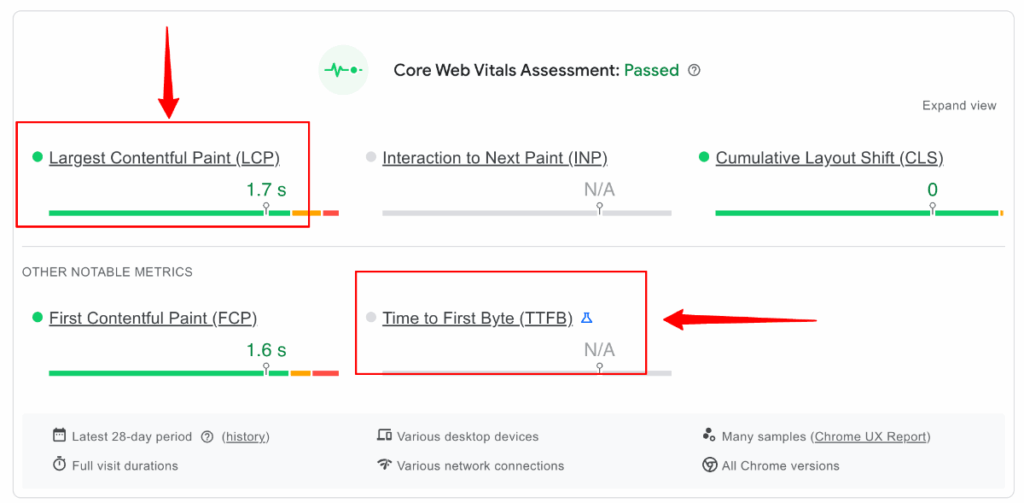
I’ve optimized my WordPress site with the FlyingPress cache plugin. You can see improvements in LCP and TTFB speed scores.
Speed Score Without Cache Configuration
Speed Scores After Cache Configuration
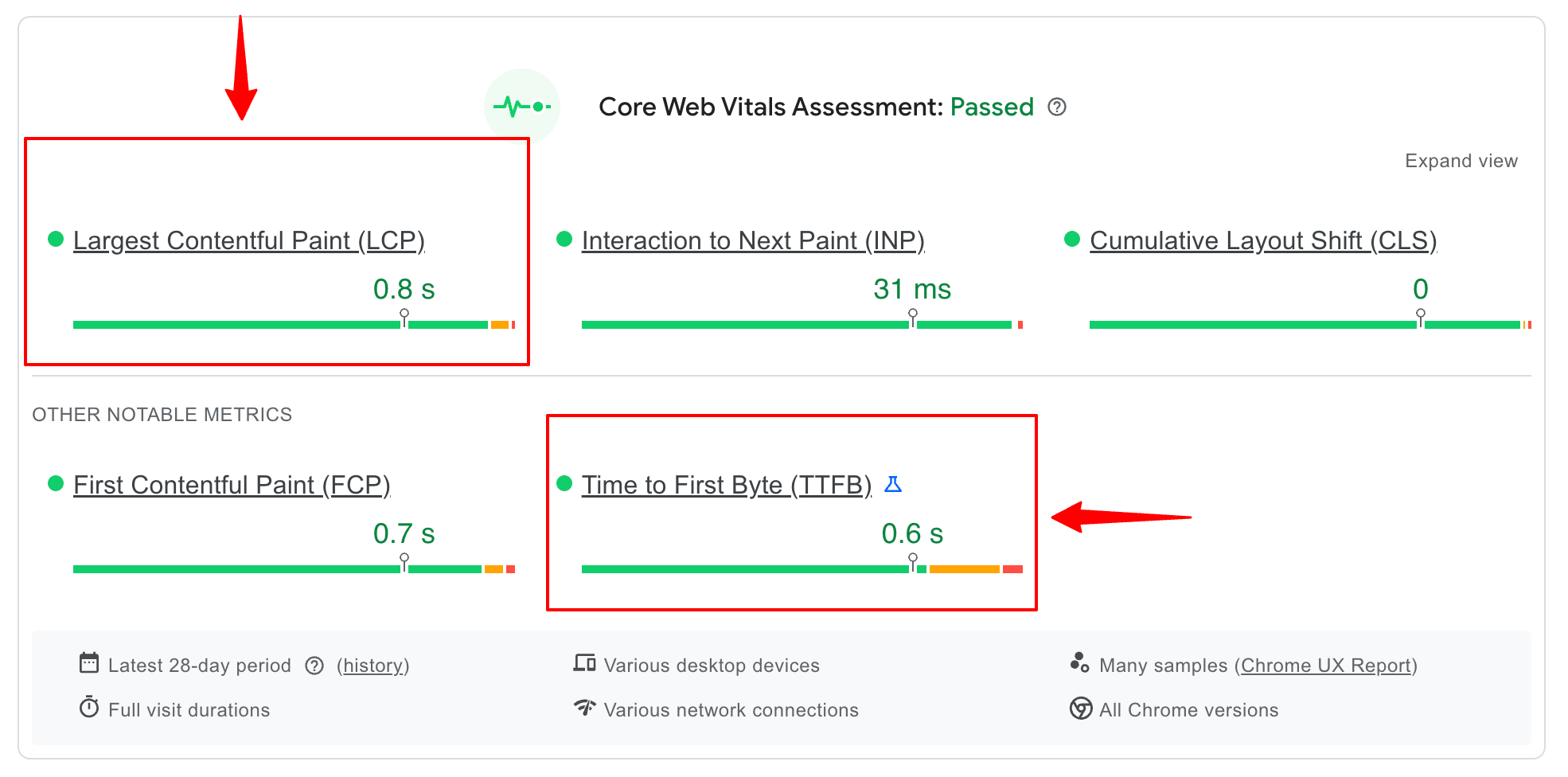
- LCP reduced from 1.7s to 0.8s
- TTFB improved by 75%
- PageSpeed score increased from 75 to 100
These aren’t theoretical numbers! They come from real-world testing using the PageSpeed Insights tool!
FAQs – WordPress Cache Plugins
Which is the fastest cache plugin for WordPress?
WP Rocket and FlyingPress deliver the best results, and it depends on your hosting environment.
Do I really need a caching plugin?
Yes. Without caching, your server has to process every request dynamically, which significantly slows down your site.
Can I use multiple caching plugins together?
No. This often leads to conflicts and can cause your site to break.
Is caching enough to speed up WordPress?
Caching is essential, but the best results come when combined with CDN, image optimization, and proper hosting.
Wrapping Up
After years of testing and optimizing WordPress sites, one thing is clear: caching is not optional if you care about performance and SEO.
If you approach caching strategically rather than just installing a plugin and hoping for the best, you’ll see measurable improvements not just in speed, but in rankings, traffic, and user experience.
- Ease + performance – WP Rocket
- Lightweight – FlyingPress
- Free + powerful – LiteSpeed Cache
- Full control – W3 Total Cache
- Beginner Friendly – WP Super Cache
The plugin you choose matters; it should fit your hosting, website type, and technical comfort level. Which WordPress cache plugin would you like to install?


Hi Sakthi,
What a great list! When I set up my website, caching plugin was the most confusing thing for me. I went through several guides to find the ideal one for my website. I am sure your article will also help a lot of people who are just starting with WordPress. Your list included a lot of great options, and I will share them within my network to help aspiring website owners in my group. Thanks a lot for such a great share!
This was really informative Post, thank you for sharing this, It was really helpful.